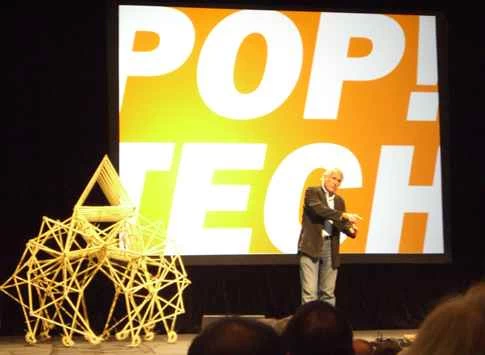
ポピュラーサイエンス誌に寄稿する未来学者アンドリュー・ゾッリ氏がキュレーターを務めるPopTechカンファレンスは、毎年10月にメイン州カムデンで開催され、世界で最もエキサイティングなアイデアや発明を紹介しています。今年のカンファレンスは、現代人類が直面する「壮大な課題」に焦点をあてています。PopSci編集長のマイケル・モイヤー氏がカンファレンスの記録を公開しました。これは、テクノロジーと文化の交差点を形作るアイデアやトレンドをまとめた、いわばクリフノートと言えるでしょう。講演者の詳しいプロフィールはpoptech.orgでご覧いただけます。
トピックと講演者:
そこに何があるのかを見る
グラハム・フリント
Gigapxlカメラの構築
ボブ・ハナー
DNAバーコード、生物多様性、そしてあなた
生きています!
ノーマン・パッカード
ゼロから人生を創造する
テオ・ヤンセン
人工生命としての彫刻
心と体
トッド・クイケンとジェシー・サリバン
世界初のバイオニックアーム
エクスプローラーズクラブ
ピーター・ディアマンディス
賞品を使って探索を奨励する
マーシャ・マクナット
ロボットによる超深海探査
キャロリン・ポルコ
カッシーニに乗って土星への旅
人、場所、そして地球
マーク・ライナス
気候変動による人類の損失
スケトゥ・メータ
最大の都市ボンベイでの生活
東西の出会い
オデッド・シェンカー
中国の世紀:我々は終わりか?
レベッカ・マッキノン
「中国とインターネット:変化は双方向に起こる」
シリアスゲーム
エド・カストロノバ
空中からの金:人工世界の経済
イヴァン・マロヴィッチ
ビデオゲームを政治組織や反対意見表明のツールとして利用する
スティーブン・ベルリン・ジョンソン
悪いものはすべてあなたにとって良いもの
参加革命
ヨハイ・ベンクラー
ネットワークの富 ― 社会的生産が市場と自由をどう変革するか
ニコラス・ネグロポンテ
100ドルのノートパソコン
バート・デプラム
Flock: ウェブブラウザへの新しいアプローチ
生息地
ロバート・ニューワース
21世紀の中世都市
インゴ・ギュンター
芸術を通して世界のデータを見る
大きな修正
キャメロン・シンクレア
デザインを活用して災害救援の方法を変える
ニール・ガーシェンフェルド
何でも作る方法
アイデアの未来
サム・ハリス
信仰の終わり
スーザン・ブラックモア
ミーム学の未来
私たちは何を知っているでしょうか?
ナシム・ニコラス・タレブ
予言のスキャンダル
ロバート・トリヴァース
欺瞞、自己欺瞞、そして戦争
グラハム・フリント
Gigapxlカメラの構築
これに関するPopSciの記事に注目してください:最も鮮明な画像
サンディエゴのパノラマでプレゼンテーションが始まります。
どれだけタイトに撮影できるかが分かります。しかし、画像の中央部分では多くのカメラがこれほど鮮明に撮影できますが、端の部分ではそれほど鮮明に撮影できるカメラはほとんどありません。
何の役に立つのでしょうか?この解像度は様々な用途で必要です。その一つがバーチャルリアリティです。バーチャルリアリティの真髄は、現実と区別がつかない仮想環境を作り出すことです。周囲を包み込むような映像が必要です。IMAXシアターやプラネタリウムがその好例です。どこを見ても、20/20の視力に挑戦しなければなりません。半球を覆うには75メガピクセルが必要です。しかし、実際に探索するなら10/1にズームインして7ギガピクセルが必要です。これは静止画の場合です。
デジタル時代になぜフィルムを使うのか?それは数字に全てが詰まっている。1/200秒で4×10^9ピクセルを捉えている。それをデジタル化すると、1ピクセルあたり48ビットになる。つまり、毎秒40テラビットのデータを捉えていることになる。これほど高速にデータを捉えられるデジタルシステムは他にない。
私たちが行ったのは、シーンとカメラ間のステップを一つずつ実行し、バランスをとって、情報の損失を減らすことでした。
彼は冷戦時代のU2ミッションで使われていた古いフィルムマガジンをベースにこのカメラを製作しました。フィルムサイズは9×18インチ、解像度は1平方インチあたり25メガピクセルです。
焦点距離の選択は重要です。短すぎるとフィルム解像度が優先され、長すぎると大気によるぼやけが優先されます。
西側の風景を見ると、光学的な焦点距離は200~300mmです。しかし、対角線で500mmもあるのが問題です。つまり、焦点距離はフィルムまでの半分の距離なので、超広角に相当します。
問題は、エッジ周辺の明瞭性を得ることです。
レンズを自分で設計しなければならなかった。コンピューターで1年かかった。レンズは8枚構成(通常の6枚構成)。4枚のレンズを自作し、どれもほぼ完璧だった。
レンズの焦点を 1/1000 インチの半分に合わせる必要があります。
何をするかというと、「アメリカの肖像」というウォームアッププロジェクトがあります。商工会議所に行って、彼らが最も誇りに思っているものは何ですかと尋ね、それを採用します。3年かけて10万マイル(約16万キロ)も運転しました。
そこから、このプロジェクトへの関心は大きく高まり、今ではウェブサイトの訪問者数は1日あたり約200万人に達しています。Google EarthのCEO、マイケル・ジョーンズ氏は、国際的な視野を持ち、地球上の保存不可能な遺跡を記録すべきだと考えています。例えば、酸性雨によって石灰岩が侵食されているローマ市などです。788件の世界遺産が危機に瀕しています。私たちは第二世代のカメラを使って作業を進めており、2つの撮影チームが必要になります。
今のところフィルムでしか撮影できませんが、それでも十分でしょう。ハワイ大学はPanSTARRSの開発に取り組んでいます。広大な空の領域を撮影する設計です。512×512のCCDアレイを4000個並列に配置しています。まるで4000台のテレビが連動しているようなものです。1.07ギガピクセル。2006年に運用開始予定です。
新たなディスプレイ技術:Evans & Sutherland社との提携。4000 x 8000ピクセルの画面。32メガピクセル。次世代は128メガピクセル、対角16フィート。
トーリーパインズのパラグライダーの写真で終わります。
ボブ・ハナー
地球上のすべての生物の目録を作成する
DNAバーコード、生物多様性、そしてあなた
分子の解像度まで下げていきます。
もし今地球上の生物を一つでも特定できるとしたら、それは何でしょう?そんな世界が私たちの目の前にあります。生命をバーコードで識別する:DNAの短い断片を分析することで種の識別を可能にする。
分類学:世界最古の職業。創世記2章19節。アダムがすべての生き物につけた名前は、すべて生き物の名となった。
18世紀に近代分類学が誕生しました。リンネは1748年に4,000種を記載しました。100年後、ダーウィンはすべての種が互いに関連しているという結論に達しました。私たちは、共通の祖先に基づいて分類を組み立てようとしています。
私たちが知っていることの総計:博物館における伝統的な形態学的説明。
私たちは生物多様性について非常に多くのことを知っていますが、あなたや私にはそれが理解できません。現場でも、そしてあなたや私には理解できず、それが私たちを生物非識字者にしているのです。
バイオリテラシーを持つことは、私たち自身と自然への対応方法に役立つかもしれません。
私たちの惑星には 1,000 万から 1 億種の生物が生息していますが、最も優れた人間でも識別できるのは 1,000 種だけです。
あらゆる種を識別し、それを Google で検索できるとしたらどうなるか想像してみてください。
これは生物学の大きな課題の一つです。
既知の生物多様性は、動植物合わせて170万種です。推定生物多様性は1,000万種から1億種です。
種の記述と理解を加速させる必要があります。これは大きな課題です。
アイデア: DNA 配列データを水平ゲノミクスに使用して、1 つの遺伝子を取り、すべての種間で比較します。
バーコードを開発できます。ヌクレオチドの違いを利用して、バーコード間の違いを識別します。
彼らはミトコンドリアのDNAに注目しています。そこでは、CO1遺伝子という一つの遺伝子が使われています。しかし、CO1は植物に使用できるほど速く進化していませんが、動物にとっては優れたマーカーとなります。
この遺伝子全体にわたって人間には基本的に違いはありませんが、人間と他の類人猿、そして類人猿自体の間には大きな違いがあります。
例えば、18世紀から知られていたある蝶は、DNAに基づいて10種に分類されることが判明しました。しかし、何百年もの間、誰もその事実を知りませんでした。世界には他にどれだけの蝶がいるのでしょうか?
現在、バーコード化にはDNAの配列を解析する実験室作業が必要です。その後、その種に関する他の多くの情報とともにデータベースに追加されます。
最も重要なバイオメディカルデバイスは何でしょうか?彼は電話だと考えています。今では世界中の誰にでも電話をかけることができます。生物多様性のためにも同じことができないでしょうか?携帯可能なDNAバーコーダーを作る。技術的には実現可能でしょう。
FAAは、航空機へのバードストライク(鳥衝突)を理由にバーコードに関心を示している。業界に年間4億ドルの費用がかかる。
もう一つは牛の飼料のBSEを監視することだ
もう1つは、外来種や魚類の幼生個体群(減少している個体群を追跡する)を理解することです。
国際貿易:マツノマダラカミキリはカナダに今後10年間で15億ドルの損害を与えると予想されています。侵略的外来種です。
必要なのはDNA検索エンジンです。DNA技術の小型化が必要です。1分、1つの配列、1つの名前、1ペニー。
これを立ち上げる起業家クラスの人々を見つけなければなりません。
私たちは、世界に生物リテラシーを身につけさせ、この技術を世界に広め、生物界へのアクセスを民主化しなければなりません。
ノーマン・パッカード
生命の創造に取り組んでいます。カオス理論と呼ばれる理論の多くを担い、複雑な非線形力学を金融システムなどに応用しました。数年前、彼は完全に合成された生体細胞の創造に着目しました。
生命と「生きるテクノロジー」とは何か?
生命とは何か? 要件:自己維持、自己複製、進化可能性。これらは生命に必要なものです。しかし、炎はどうでしょうか?乱流は?星はどうでしょうか?これらは定義に当てはまるように思えます。私はそれらは問題ないと思います。しかし、進化可能性に注目する必要があります。進化可能性とは必ずしも変化を意味するわけではありません。何らかの遺伝と選択が行われていることを意味します。これらは他のものでは見られていません。社会や生態系はどうでしょうか?これは真実かもしれません。私たちの基準では、それらは生きているのかもしれません。
生命とは驚くべきテクノロジーです。最も単純な生命体でさえ、非常に複雑です。大腸菌を見てください。彼らを太らせて幸せに育てれば、彼らは永遠に繁殖します。まるで生物と一緒に工場も手に入れたようなものです。生物は自らを作り続けます。生命が持つ基本的な技を、私たちが実現できる技術を開発するには、まだ程遠い道のりです。
リビングテクノロジーとは、生命に似た特性によって定義され、強化されるテクノロジーです。例としては、合成生物学、生態工学、社会工学、インターネットなどが挙げられます。
合成生物学とは、新しい生物学的部品、デバイス、システムの設計と構築、および既存の自然システムの再設計を指します。
トップダウンとボトムアップを区別しましょう。トップダウンは既存の生命のメカニズムを利用します。生物学から始まります。例えば、遺伝子転写を利用して新しい遺伝子やタンパク質を作り出すなどです。ボトムアップはゼロから何かを構築します。化学から始まります。今回はボトムアップについてお話します。
これに関するPopSciの記事に注目してください:Life Built to Order、2005年2月
なぜボトムアップアプローチにこだわるのでしょうか?一つは生物と無生物の違いを理解すること、もう一つはそれらの工学的設計を合理化することです。そして最も重要なのは、自然界には存在しない機能を工学的に実現できるということです。
生命のこれら 3 つの要件は、細胞に必要な 3 つの要素 (容器 (細胞壁)、代謝、情報コンポーネント (生きた細胞内の DNA と同等の進化可能性を与える)) にマッピングされます。
PACE。プログラム可能な人工細胞進化。PopSciプロファイルのRasmussenは代謝コンポーネントに取り組んでいます。他の研究者はDNAオリゴマー、小胞、マイクロ流体生命維持に取り組んでいます。
私が勤めているProtoLife社では、容器に焦点を当てています。脂質をベースにした膜を開発しています。膜の仕組みを理解した上で、様々なコンポーネントの統合という課題に取り組んでいます。これは人工細胞を設計する上で最大の課題です。個々のコンポーネントはそれぞれ十分に研究されていますが、それらをどのように組み合わせて、物体の再生を可能にするかは、全く理解されていません。
コンテナはどのように作られているのでしょうか?構造空間の探索には、進化的アプローチ、つまり遺伝的アルゴリズムを用いています。これは対象の機能性に基づいて行われます。複雑ではありますが、その複雑性によってアルゴリズムは空間の探索に余裕を持つことができます。
細胞分裂は複雑なプロセスです。目の前で分裂する小胞を見つけるのは容易ではありません。そこがフロンティアなのです。
人工細胞の中間アプリケーション: 薬物送達用のデザイナー小胞、長期: 生物医学: スマート薬物送達、診断ツール、エネルギー (たとえば、水素を生成するプログラム)、炭素隔離、環境修復。
私たちが目指す科学はどのように違うのでしょうか? 現代科学は強力です(ガリレオ、ニュートン、アインシュタインなど)。特徴:自然法則があり、そこから自然が何をするかを導き出すことができます。動的システムには静的な軌道を描くことができます。例:惑星の運動、自動車、コンピューター、爆弾の設計。
私たちはポストモダン科学を実践していますが、それは弱いものです。例えばダーウィン。それは手に負えない自然法則です。それを記述することはできますが、そこから導き出せない現象があります。そこには創発的な性質があり、創発レベルでは新たな法則が生まれます。例えば、カオス、乱流、生命、意識などです。
生命は、導出可能な現象と導出不可能な現象の境界、強い科学と弱い科学の境界にある。これは、あらゆる細部を工学的に解明するという要求を放棄しなければならないことを意味する。私たちは、これに伴う不確実性と共に生きなければならないのだ。
これは、科学が知的現象として一段とレベルダウンすることを意味しますが、この新しい世界でも現象の断片を導き出すことは可能です。ただし、それはパッチワークです。とはいえ、豊かな問題領域は確かに存在します。そして、私はそれに取り組むのが楽しいです。
安全性の問題に関しては、DNAを基盤としない生命体がDNAを基盤とする生命体よりも危険であるという証拠はありません。実際、DNAを基盤とする生命体は他のDNAを基盤とする生命体と相互作用できるため、危険性ははるかに低いと考えられます。
強力な新技術がプラス面とマイナス面の両方の可能性を秘めていることは、今に始まったことではありません。2点あります。まず、これらの合成生命体は今後も存在し続けるでしょう。法律で排除することはできません。既に存在し、進化していくでしょう。私たちは、これらの技術を皆様に信頼していただける手に委ねたいと考えています。技術開発だけでなく、これらの技術を用いて反応し、制御する技術もです。
テオ・ヤンセン
人工生命としての彫刻
生体システムはタンパク質という一つの物質に基づいています。私は別の物質、つまり私の国で電気に使われている導管を使います。彼は約60センチほどの黄色い管を持ち上げ、それをダーツガンのように使います。
「Artefauna: the artificial beast」というビデオを紹介します。
これらは、浜辺を風によって運ばれる骸骨のような生き物です。
彼はコンピューター内で生物を「進化」させた。コンピューターは脚を構成するチューブの長さをそれぞれ異なる値に設定し、それをランダムに変更し、最も動きの良かったチューブを残し、またランダムに変更するという動作を何世代にもわたって繰り返した。そして、彼が「11の聖なる数字」と呼ぶものを導き出した。
トッド・クイケンとジェシー・サリバン
世界初のバイオニックアーム
これに関するPopSciの記事に注目してください:バイオニックマンへの乾杯、2005年10月
なんとも素晴らしいプレゼンテーション名だ。「筋電義肢の制御を改善するための標的再神経支配」
クイケンが主に話している。
ここでは、テクノロジーを有効にするために人間を変えているのであって、その逆ではありません。
現在の最先端の義肢には電動関節が搭載されています。筋肉の動きや収縮を感知し、それを手の動きに反映させます。ただし、これは肘下のみに有効です。
肩を切断した人のほとんどは義肢を装着しません。義肢の効果が十分に得られないからです。
神経に耳を傾けてください。私たちは神経を使い、それを予備の筋肉、この場合は胸筋へと成長させています。神経信号が胸筋を収縮させ、その筋肉の動きを読み取り、人工器官を操作します。これにより、感覚フィードバックも可能になります。
胸部を見ると驚きます。例えば、ジェシーが「手を開く」と考えると、特定の 4 つの胸筋のうちの 1 つが収縮し、まるで眉を上げているように見えます。
「みんなどうやってやっているのか聞いてくるけど、わからないよ。ただやるだけさ」とジェシーは言う。
驚くべきことに、彼の感覚神経は胸の皮膚にまで伸びていました。そのため、胸に触れると、彼は自分の手、手首、あるいは指の感覚を感じるのです。そして、小さなプランジャーを胸に繋げると、彼は自分が何に触れているのかを「感じる」ことができるのです。握っている感触の硬さや柔らかさ、熱いのか冷たいのか、鋭いのか鈍いのか、といった感覚です。彼は義手で感覚を得られる初めての人です。
彼の新しい腕は、中国からの手、研究室からの肘など、さまざまな部品を実験的に組み合わせたものです。
「私は将来に楽観的です。クイケン博士がこの件について私に相談してきたとき、こんなに大きな出来事になるとは思っていませんでした。」
しかし、クイケン博士の言葉を借りれば、これはテープとチューインガムで固定された原始的な装置だ。彼らは今後何をするのだろうか?神経移植をさらに進め、より多くの神経をより多くの筋肉に接合することで、より多くの制御信号を作り出すのだ。彼らは正確な神経パターンをトレースし、例えば彼がそれぞれの指を個別に使えるようにしたいと考えている。彼に電極アレイ(現在の6個ではなく150個)を装着し、信号を解析して制御を可能にすることができるかどうかを調べるつもりだ。
ピーター・ディアマンディス
賞品を使って探索を奨励する
9歳の頃から、皆さんを宇宙へ連れて行くことが私の使命でした。また、革新的な発見にも情熱を注いでいます。
彼は宇宙のフロンティアを開拓することが道徳的責務だと考えている。
探検は宇宙に行く動機としては最も弱い。
大きな動機となるのは富です。最初の兆万長者は宇宙で誕生するでしょう。平均的な幅0.5キロメートルの小惑星は、白金族金属で20兆ドルの価値があります。
恐怖もまた動機となる。私たちは長年にわたり、小惑星の襲来に見舞われてきた。
ついに人類を地球から排除する能力が私たちには備わった。人類の文化をこの生物圏から救い出すことは、私たちの道徳的責務である。
不可能はない。
過去 40 年間で宇宙のコストは上昇し、信頼性は低下しました。
宇宙に出たら、どこへでも 2/3 は行けます。
エネルギーコストだけで言うと、人間を軌道に乗せるには100ドルかかります(大まかな基礎物理学の計算で、高度200kmで時速17,500マイルまで加速します)。私たちは2,000万ドルを100ドルにまで下げようとしています。
X賞は固定費エンジニアリングのコンテストです。チームは1,000万ドルの賞金を得るために、2,500万ドルから1億ドルを費やしました。27チームが参加しました。
現在、ルータンはXプライズを受賞した結果、NASAと協力して宇宙エレベーターの建設や小惑星の採掘を行う100周年記念チャレンジ賞の実施に取り組んでいます。
後続のコンテスト:Xプライズカップ。これは毎年開催される、いわば宇宙版アメリカズカップです。参加者は、高度、上昇時間、見た目のカッコよさ、ターンアラウンド時間、ダウンレンジなど、特定の賞品の獲得を目指します。毎年ニューメキシコで開催されます。2006年は10月21日と22日に開催されます。
Zero Gについてご紹介します:zerogravity.com。商業用の無重力飛行です。これまでに50回の飛行を実施し、1200人を無重力状態に導きました。まもなくラスベガス(現在はフロリダ)から運航開始予定です。このサービスは、宇宙旅行を希望する顧客、つまり潜在的な宇宙旅行者を獲得することを目指しています。
新プロジェクト:ロケットレーシングリーグ。10台の新車両を製作中。
有人宇宙飛行においてリスクを取らないという私たちの歴史が、そこでのイノベーションを殺しているのです。
X プライズ財団の新たな使命: 根本的なブレークスルーを生み出す。
スポンサーからは、得られる宣伝効果に応じて資金を得る計画です。彼らはこれを500倍の投資と見なしており、成功するまでスポンサー料を支払う必要はありません。
将来、大きな成果を上げるための賞金が1億ドルになるだろうと想像しています。宇宙だけでなく、エネルギー分野でも。自動車産業を変革するための賞も発表される予定です。環境、ナノテクノロジー、遺伝学、医学(個人のDNA配列)、教育といった分野でも賞金が授与されます。
X Prize 財団は、もはや宇宙だけを対象としているわけではありません。
Google の Larry Page、Craig Venter などがバックアップしています。
現代の壮大な課題に取り組むには、リスクを取り、報酬を提供することです。リスクを取れないことで、私たちは自らを殺しているのです。人類の壮大な課題を解決するための最も重要な手段は、献身的で情熱的な人間の精神です。
マーシャ・マクナット
非常に深い海のロボット探査。
モントレーベイ水族館の研究機関を運営
宇宙探査と海洋探査の比較:宇宙では、太陽電池パネルを使って機器に電力を供給できます。しかし、海洋ではそうはいきません。バッテリー、あるいは深海まで延びる光ファイバーケーブルに頼る必要があるのです。
海底で地震計を稼働させ続けるには、ROVを操縦してリチウムイオンバッテリーを交換しなければなりません。バッテリーは1万ドル、稼働させるのにも1万ドルかかります。実際のエネルギー消費量はわずか7セントです。
また、通信: 海中を通じた電磁放射は禁止されているため、接続する必要があります。
宇宙では、フジツボが付着しても汚れの問題はありません。
しかし、打ち上げは少し楽です。重力から逃れるのは難しいです。しかし、船の側面から何かを投げるたびに、それは海の底に沈んでいきます。
自律型水中車両は、船舶からの進水を必要とするロボット車両よりも、建造と運用が桁違いに安価です。テザーが不要なので、船を航行させる必要がありません。
これはスピリットやオポチュニティの場合と同じです。彼らは高度なAIを(オペレーターからの毎日の指示に基づいて)移動に使用しています。NASAは、AIを使用することでミッションの収益率が少なくとも20%向上することを発見しました。
氷床。氷床がどれだけ薄くなっているのかを知りたい。北極の氷の下に潜るためのAUVを製作した。このAUVには2つの中間部が取り付けられている。1つは燃料電池を搭載し、2週間稼働できる。もう1つはコンピューターで情報を保存している。時折、魚雷のようなものを放出する。浮上して氷床の底に衝突し、氷床を溶かして衛星経由でデータを送信することで、ミッション終了時にAUVを回収しなくても正確なデータを取得できる。100%成功する必要もなかった。
私たちはゆっくりと海のpHを酸性化させています。二酸化炭素が海に溶け込むと、pHが低下します。今世紀末までに、海洋表層は地球上の生命が誕生した4億年の中で最も酸性度が高くなるでしょう。
当然のことながら、これに慣れている生物はいません。これは海にどのような影響を与えるのでしょうか?具体的には、動物はこれに対処できるのでしょうか?光合成にどのような影響を与えるのでしょうか?深海生物はpHの変化に適応できるのでしょうか?
おそらく私たちは、賽を投げられた段階にいるのでしょう。運命を変えることはできません。しかし、それがどのような結果をもたらすかを理解し、それに備えることはできます。
悲観的な話はもう十分です。ここからは楽しい話です。地球の中層水域は地球上で最大の生命空間です。そこは永遠の暗闇に包まれた領域です。そこには、熱帯雨林全体を合わせたよりも多くの生物量と生物多様性が存在します。外に出るたびに、新しい種、新しい属、そして時には新しい科を発見するのです。
時には新たな生態系が発見されることもあります。海の底にはコククジラの死骸がありました。突然、7トンもの食料が海の底に流れ込みました。彼らが発見した海底生物の40%は、クジラの死骸にしか生息していません。そこで疑問が生じます。彼らはどのようにしてクジラの死骸を見つけるのでしょうか?
クジラの骨髄を餌とする新しい寄生虫の科を発見しました。口も胃もありません。骨髄から直接脂質を抽出して餌とします。しかも、発見されたものはすべてメスでした。メスの体内には、数百匹の小型の寄生虫がいました。オスは精子を産生できる段階までしか成長せず、その後は成長が停止しています。疑問は、これは有性生殖の初期段階なのか、それとも後期段階なのかということです。
ハハ。冗談だよ。
海水一滴には1000個の微生物が含まれています。しかし、実験室で99%を培養することはできません。そこで、海中でそれらを読み取るシークエンサーが開発されました。
メタンハイドレート:MH4。「燃える氷」。残された最大の化石燃料源だが、大陸棚の下に埋もれている。入手する方法はない。しかし、微生物が方法を見つけ、深海燃料電池を作り出した。
私たちは長い道のりを歩んできました。しかし、これから何が発見されるのか、まだ予測できません。
キャロリン・ポルコ
土星カッシーニミッションの主任画像科学者
ここから何十億マイルも離れたところで何が起こっているのかお話しします。
カッシーニは人類が太陽の周りでこれまでに建設した最も遠いロボット前哨基地です。
土星は木星と同じような特徴をすべて備えていますが、より深いところにあります。土星は木星よりも寒く、もやもやしているので、観測が困難です。例えば近赤外線では、はるかに多くの構造を見ることができます。土星や木星、あるいは地球の大気の風にエネルギーを与えているものが何なのか、現在のところ分かっていません。そのため、その構造についてはまだ多くのことが分かっていません。
リングは何十億もの粒子で構成されています。家ほどの大きさのものから、極めて微細な粉末まで。
渦巻銀河の構造を解明する数学は、土星の環の研究にほとんど手を加えることなく、そのまま流用されました。つまり、土星を理解することは銀河の理解にもつながります。まさに普遍的なのです。
現在、衛星は合計47個あります。カッシーニは内側の衛星のみを観測しています。内側の衛星はミニチュア版の太陽系のようなもので、太陽系全体を観測することで惑星形成過程への理解を深めたいと考えています。国際宇宙ステーション(ISS)が地球に接近するよりも近い地点でタイタンにフライバイしたこともあります。
これらの衛星にはたくさんのクレーターがあります。かつて太陽系の周りをたくさんの天体が飛び回っていて、これらのクレーターを作っていた時代があったのです。環が形成される仕組みの一つは、天体が他の天体に衝突して粉々になることだと考えられています。
そしてノートパソコンのバッテリーが切れるのです」
マーク・ライナス
気候変動による人類の損失
マークリーナス
お互いを同じ枠で考えるのはとても簡単です。しかし、気候変動はそうできる問題ではありません。気候変動は人類全体と生物圏の対立です。私たちは人間対人間の対立に慣れていますが、これは違います。
地球全体の気温は過去5000年間で最も高くなっています。地球が気候の限界をはるかに超えた場所に移動したため、気候学者たちは地球の歴史において新たな時代、つまり人類という単一の種が支配する時代に入ったと述べています。
まるで「デイ・アフター・トゥモロー」のようです。大西洋流域で史上最強のハリケーンが襲来したばかりです。
さて、逸話はデータに取って代わるものではありません。しかし、既にデータが十分に確立されている場合、それを補完するものとなります。それでは、いくつか逸話を語ってみましょう。
ペルーのアンデス山脈にある、ペルーの人々にとって貴重な水源である氷河の上を歩いていました。氷河は急速に後退しています(後退前後の画像をご覧ください)。氷河が流れ込む氷河湖を見ると、1980年以降、氷河が約500メートル後退したことがわかります。美しい氷河が残した不毛の岩が、実に印象的な画像です。
リマが依存する水はすべて、河川の渓谷から供給されています。700万人の人口を抱え、カイロに次ぐ最大の砂漠都市であるリマ市全域の水を供給する氷河があります。そして、この氷河は何キロメートルも後退しています。
世界氷河財団は、世界の氷河の97パーセントが後退していることを発見した。
この水に海水の熱膨張が加わると、海面上昇が発生します。南太平洋のツバルを例に挙げましょう。20世紀にはわずか数cmの海面上昇しかありませんでしたが、島は常に浸水の危機に瀕しています。島の中央部では、地面から水が押し上げられています。これはツバルにとって生存の危機です。例えば、海岸のヤシの木が失われています。新首相は、島の滅亡の危機を懸念し、住民をニュージーランドに移住させようとしています。
アラスカ州シシュマレフ。アラスカ州北部。防波島の崖に建てられた家々は、水が凍らず波が海岸を侵食しているため、倒壊しつつある。
フェアバンクス。地面が溶けて、建物が倒壊するところもあります。
彼は今、私たちがこれから直面するであろう事態を予測する科学論文をすべて集めようとしています。彼はホッケースティックグラフを示し、気温が指数関数的に上昇していく様子を示しています。このグラフは、地球温暖化が最大6度上昇すると予測しています。
1度:コードブルー。すべてのサンゴ礁が消滅する可能性が高い。グレート・バリア・リーフはすでに白化している。ネブラスカ州は9000年前には砂漠だったが、2025年までに再び砂漠化するかもしれない。このレベルの気候変動は避けられない。
2度:コードグリーン。氷河と一部の保護区が失われる。
3度:コードイエロー。生物多様性の危機。大量絶滅。2050年までに全種の3分の1が絶滅する可能性がある(Nature誌掲載)。グリーンランドの氷床全体が融解し、海面が6メートル上昇する。フロリダの大部分が水没するだろう。東海岸の広大な地域が浸水するだろう。アマゾンの熱帯雨林は新たな環境へと移行し、砂漠化する。植物に含まれる炭素が大気中に放出され、正のフィードバックを生み出す。
4度:コードオレンジ。北極の海氷は夏には消え、北極の哺乳類はすべて絶滅した。
五度の気温上昇。コードレッド。パキスタン全土を支えるインダス川の源流であるネパールの氷河山脈はすべて消滅する。1億人が死亡、あるいは避難を余儀なくされる。これは世界の安定にどのような影響を与えるだろうか?ラーセンB棚氷は崩壊する(すでに始まっている)。
歴史上、これほどの地球温暖化が最後に起こったのは、始新世(5500万年から3600万年前)でした。大気中の二酸化炭素濃度が500ppmを超えたのは、この時が最後でした。
シックス・ディグリーズ:コード・ブラック。誰が知るだろうか?前回これが起こった時は、ペルム紀の大量絶滅で95%の生命が絶滅した。
私たちが人類として生き残るためには、この問題をもっと真剣に受け止めなければなりません。
スケトゥ・メータ
彼の最新の本は今年のピューリッツァー賞の最終候補となった。
それはマキシマムシティと呼ばれていました。
ボンベイを離れてから21年後、私は再びそこへ戻りました。今はムンバイと呼ばれる街に戻ってきました。
その後、彼はボンベイの詳細な記述を読み上げます。注目すべきは、将来のアジアの都市における都市密度の問題に関する彼の分析です。
オデッド・シェンカー
オハイオ州立大学グローバルビジネスマネジメント教授
『中国の世紀』の著者
講演のサブタイトル: 私たちはもうダメなのか?
千年前、中国は世界最大の経済大国でした。彼らはここを起源とし、ここを目指そうとしていました。中国人にとって、繊維産業と安価な労働力は過渡期です。それはしばらく続くでしょうが、それでも過渡期なのです。
技術の階段を上っても、製造業を放棄するつもりはない。
中国の輸出品は急速にハイテク化しています。例えばコンピューター部品など。もはやTシャツだけではありません。
アメリカは世界に対して莫大で持続不可能な貿易赤字を抱えています。GDPの6%です。歴史的に見て、他の経済圏はここから問題を抱え始めました。私たちは未知の領域に足を踏み入れています。労働集約型のものを作れないなら、一体何を作れるというのでしょうか?アジアの他の国々は黒字で、ヨーロッパは今まさに赤字に陥りつつあるのに、なぜアメリカは赤字なのでしょうか?理由は様々です。アメリカの経済はより開放的で柔軟性が高いため、工場を閉鎖して他の地域に移転させるのが容易です。
自動車部品 ― デルファイは倒産したばかり。フォードは巨額の損失を発表したばかり。GMも倒産するかもしれない。一体どうなるのだろう?日本製はもちろん、韓国製やドイツ製もある。次はどうなる?中国製部品が車に使われる(例えば、2012年発売のピックアップトラックは中国製50%、メキシコ製35%、米国製15%で、月々119ドルでリース可能。計算通りだ)。ローバーというブランド名で販売されている。このブランドは最近、中国企業に買収された。皮肉なことに、これが英国最後の製造業だった。
上海汽車は、5~6年後には世界トップ5の自動車メーカーの一つになるという野望を公言しています。彼らはローバーを買収しました。それはもうすぐ実現するでしょう。時間の問題です。それが何を意味するのか、私たちには分かりません。
我々の優位性が永遠に享受できると信じていたのは愚かだった。アメリカは19世紀末のイギリスと同じ道を辿っている。当時、我々はイギリスから世界最大の経済大国の座を奪った。例えば2025年には、その座を中国に明け渡すことになるのだろうか? 類似点:1800年代半ば、イギリスは我々があまり心配することなく、安価な製造業を任せてくれた。彼らの方が優れた技術を持っていた。それがどうなったか見てみよう。
What follows is many examples of parallels between England-US 140 years ago and US-China today.
But the counterexample is whether or not China will break out of its ways of the last millennia, embracing new technology and innovation and science and new ways of doing engineering, business, and technological development.
Chinese who come to the US to get their PhDs make up about 7 percent of our student force. Before, only about 10 percent were going back to China. Recently, that number has grown to 25 percent. How high will it go? South Korea is at 90 percent.
We can run a deficit for only as long as china keeps buying our money-our T-Bonds and the like. One day, they'll stop, or they'll charge higher interest rates. Then we feel china's influence everywhere we buy everything.
There is no precedent of any major economy based solely on services.
Final thought: Challenge and question comforting analogies and precedents that you might hear.
Rebecca MacKinnon
Senior Fellow, The Berkman Center for Internet and Society at Harvard Law School.
Former bureau chief, CNN Beijing
China and the Internet: The Change Goes Both Waysâ€.
Our story starts in the remote village of Pu Sa Lu. 150 people in the village. She went there in 1999 with CNN camera crew for story about UFOs-there had been sightings reported in the Chinese media of UFOs, and they went to do a silly story. (The Chinese are obsessed with UFOs much as we are.)
The party secretary meets their car when they arrive, and takes them to meet some peasants. But it became clear that the secretary wasn't excited that they were there for UFOs, they wanted to spark tourism and hence investment. And so the village started a website, pusalu.com, back in 1999. It's still there today. That strategy has succeeded-the village now has investment and some tourist traps, but also money to set up computer training center for nearby farmers. Through the internet, farmers can buy products and find markets and do all this without leaving the villages and coming into the cities. And this is why the internet is important to china, why they need it.
Government investing heavily in infrastructure to bring internet into the villages.
But it might bring ideas that the government is uncomfortable with. Most popular: sex blogger Muzimei. Wenxue.com. She details her very active sex life. Very active. Not the sort of thing that the government is comfortable with. This is strange because until a few years ago you needed to get past gatekeeper to get online. Now people doing it themselves.
MP3 megahit: Mice Love Rice. Over 100 million downloads. Just a schoolteacher who threw it up on the internet and now he's a megastar in China. I love you just like mice like rice-that's the song's refrain.
While you can't post blogs slandering the party or the president, internet is empowering people.
China has world's 2nd largest internet user base-103 million-though it's only 8 precedent of Chinese population (US user base: 135 million).
385 million mobile phone users in China-this is how they will get online in the future.
Much content in China is user-created content. 1/5 of users us BBS. 5 million blogs. Over 200 million SMS messages sent.
Even while there's a crackdown on blogs, their numbers are rising. Why is this? Chinese censorship is very focused on trying to prevent the emergence of political leaders and political movements coming off the internet. For instance, news of village democracy movement in Taishi was censored. So that's no good, but sex bloggers and MP3 stars are okay
Great firewall of China. Blocked: Human Rights Watch. No Google News results for “Tiananmen Massacre.” This is because of IP blocking and filtering. In the west, this is used to protect kids from porn and the rest of us from viruses. In china, used to block political content.
Isaac Mao, general manager of blogging service, won't put his blogs on his service, as his service censors content.
There are about 60 people in jail now for putting anti-government on the internet. But that doesn't concern too many current users, as any attempts to post content government doesn't like is automatically censored at the ISP level-it won't post.
Of course, this is assisted by western companies. Eg Microsoft's blog service won't let you use the words freedom of speech or democracy.
Yahoo aided the arrest of journalist Shi Tao-they gave the government his IP address when he sent an email from a Yahoo account critical of the government. He's spending 10 years in prison.
What's happening online in China is not playing catch-up to what's happening to the US-podcasts, for example, are very big. They're ahead of us in terms of Mo-blogs. Also you can read blogs through phones. We may very quickly be playing catch-up.
Why can these companies continue to innovate and move quickly? They're building censorship into their technology. This way, it doesn't slow down their business. It doesn't take away from their growth. In a way, this allows the censorship to proceed transparently.
Code is Law. â€Larry Lessig, Stanford and Creative Commons.
If we're entering a future where China will be largest user base, if innovations in the way content is creates is coming from china, if software that will allow people to communicate worldwide will be coming from china and has censorship built into it, burnt in from the get go, and if western companies are assisting in this, what will be the products of this worldwide in terms of freedom of speech? Even those countries that call themselves democracies? What happens when censorship is baked into the code and baked into the business model?
Ed Castronova
Associate Professor, Dept. of Telecommunications, Indiana University
Presentation title: Gold From Thin Air: The Economy of Synthetic Worlds
He works full time on the academic work in online interactive games.
His book: Synthetic Worlds.
Numbers: There is 61.1 million golfers in the world, 37.1 million in the US
50 percent of US population plays video games: 148 million in the US Four gamers per golfer.
This is a more popular and widespread phenomena than people realize.
Average gamer age is now 30. Getting older. 1 in 5 people over 50 is a gamer.
Movie Star Wars III biggest opening day: $50 mil. Spiderman 2 made $116 million on opening weekend.
Halo 2 made $125 million on November 4, 2004.
Game industry annual revenues are $10 billion/year, $7.6 billion in software.
Hollywood box office receipts: $9.5 billion in 2004. Has been flat for three years.
He studies multiplayer games. People all over the world share a space.
Synthetic players worldwide: 10m.
Real money trade: $100m-$1b (this is when someone pays real money USD$50 for a magic wand in the game)
Synthetic money trade: $2b-$20b (this is adding up all the stuff that's being traded within the game)
Everquest's fantasy world is called Norrath. GDP per capita of this world is $2000. Compare with the GDP per capita of China: $500. What's going on inside the video game world is more productive than what's going on in China. Really.
This is hard to accept because the line between reality and fantasy is blurring.
He now takes us into the World of Warcraft (WOW) auction house. Live.
Then to Ebay. There are pieces for sale in WOW for 1550 gold pieces. On eBay, 500 gold pieces are going for USD$41.99. that means that the values of things in Warcraft is up to USD$126.
Most players work full-time who play. Average age: 24 (post-college). 1/3 of players spend more time on the game than they do at work.
What is the difference between fantasy and reality?
We have to understand video games now because they have become an element of common literacy.
The key to immersion is not the hardware-not the virtual reality. What immerses people is the software.
Many implications for practical virtual reality.
What is making people uncomfortable? This idea that you have to be serious is coming into debate. We have felt that efficiency is productivity and fun is a waste of time. He doesn't buy that. But how do you leverage the motivational power of gaming to get work done?
If things aren't entertaining the way games are, people will tune out.
How do you use this synthetic world technology as a genuine social laboratory?
If you want to figure out how to make democracy happen in Iraq, build a synthetic Iraq and execute the constitution-writing process 70 times. Figure out how to do it.
I see a Kazaa thing about to happen in this space.
Look at the money: How real does it have to be? What if its design makes it better functioned to do what we ask of money? What are the implications of that?
From Q&A session:
It's troubling him the influence of the real world into the online world, in that it sucks that, the way things are shaping up, some rich guy could come into the game and buy 1,000,000 gold pieces, and win, and I would lose, and that sucks. It's unclear how that is to be prevented, for the game to still be fun, and for the people who aren't rich in powerful in the real world to have a separation, to be able to have a second life online.
Also, there are interesting property rights coming up. If I use MS Office and make a great word document that document is mine, not Bill Gates's. But if I build a player in an online game it doesn't belong to me, it belongs to the software manufacturer? Is that right? And what's the difference from the first case?
I think the notion of “this is virtual” and “this is real” is going to vanish in coming generations. And the first places it's eroding are in money, as we're already seeing. I think it's going to start eroding in sex and in politics too. And from there, who knows?
Ivan Marovic
Student organizer
Leader of Otpor, Serbian movement opposing Milosevic during 1999
Using Video Games as a Tool of Political Organization and Dissent
Otpor=Resistance
He shows a movie describing the events leading up to the overthrow of Milosevic by nonviolence in 2000.
The methods of this resistance have since been used in Georgia and then in the Ukraine in the Orange revolution.
How to train in nonviolent resistance?
They've created a game: A Force More Powerful. The game is designed to teach the concepts of nonviolent strategy. When you play it over and over for days or weeks you can learn strategies, to try them out in the world.
Game to be released in January 2006.
Not just for government overthrows: Discovering corruption, fighting for equal rights, etc.
This is the first demonstration of the game. Looks like it's in a virtual world, like Everquest.
This is to help people make and refine strategies to change their own societies.
Steven Berlin Johnson
Author, Everything Bad is Good for You, amongst others.
What happens when you takes games as a cultural format seriously?
New book looks at the cognitive work that you must do to make sense of the average TV show or video game.
Tells story of showing 7 year old nephew SimCity, and how the boy was astute as to the need to figure out, eg, industrial tax rates. These are cognitively complicated games, where you have to integrate a lot of information and consider strategies and make high-level decision making.
Reading books, which is great, does not involve this high-level type of decision making.
Lots of games nowadays is going around and gathering information and figuring out what the objectives are. These are not arcade games, in the traditional sense.
This is like sitting down at a chess board, but if each time you sat down they changed the rules of chess. You'd have to figure out the rules, and then build a strategy.
But is there any cultural, psychological depth? In some cases, no. But we're asking the wrong thing. Sometimes mental exercises can be good without having some greater cultural relevance just because they exercise our mind in logical ways.
Look at a show like Lost. It's a big hit, and it's been heavily influenced not by, say, Twin Peaks, but by video games. A video game like Myst. And people are sitting at home playing along, trying to figure out clues to this mystery (which have been intentionally implanted by the creators). They are treating the show like a game, applying attention to detail and logical problem solving.
We've seen with other technological platforms (VCR, op systems, etc.), there are strong pressures to standardize the system. Will these pressures apply themselves to the virtual worlds of online games? Yes, because of a few reasons: the switching cost of moving from one world to another. Open social networks are more advantageous-users are going to want to talk between WOW and Ultima, for example. And if you have a unified space, there's no need to reinvent the wheel.
He thinks that this unified world will happen in five to six years. And then, pointing to the video of Second Life, where the conference is being simulcast, he ends with “and if you think that this is the Matrix, you ain't seen nothing yet.”
Yochai Benkler
The future of open source beyond software development
Talk title: The Wealth of Networks-How social production transforms markets and freedom
イェール大学
EDITORIAL WARNING: Law school professor who talks quickly. Somethings might be incomprehensible. All is dense. My apologies. â€Ed
I'm going to talk about a fundamental change in society, in our economy.
Industrializing information economy in the 19th century creates bifurcation between producers and consumers. Needs passive large audiences and professional (commercial) producers. This has anchored the way we know the world for 150 years.
SETI@Home has had fastest supercomputer for past many years. But it doesn't count because it was distributed.
Networked Information Economy:
Radically decentralized capitalization, in terms of computation, storage and communication capacity. We have between 600 million to 1 billion people around planet who have resources to publish information
The most important inputs into the core economic activities of the most advanced economies are widely distributed. This distributes knowledge.
This means that things that people have always done outside the economy-with friends and family and neighbors-are moving into the central economy.
Commons based: Taking the work of others without requiring permission and giving back without permission.
Also, development of large-scale collaboration is becoming very productive. Lots of people coordinating to create something. Using social cues to do this, not monetary. We are also sharing material resources (like computing)
Look at Apache: Open source server software that now controls 70 percent of the market.
This is happening in all areas of information, knowledge and cultural production.
Example: NASA needed something to map Mars. Put small images onto the web, 85,000 people marked craters, say, and the result was practically indistinguishable from that done by experts. This worked because people wanted to contribute to something that was bigger than themselves.
Example: Wikipedia. â€Nuff said. Has ~60k volunteers. Is not just free, but participatory.
Example: dmoz, the open directory project. Like the Yahoo directories, but edited by 60000 people, not 500. So becomes so much better.
Now let's talk about material things.
Better storage and retrieval. We want one that stores terabytes, that can support 100 million users, robust to attack. Of course, that is P2P file sharing. Ignore the copyright for now, that is a content issue. The P2P model can create a network much better than anything overtly engineered.
Skype: is the Kazaa architecture where you share processing and bandwidth to create VoIP.
This is totally outside our transactional frameworks: a decentralized, non-market effective action. Social sharing and exchange.
Social sharing and exchange as a modality of economic projection.
Consequences included decentralized authority, reliance of social motivation.
When you go to dinner at a friend's house, are you adding to your value of being there by leaving $50 on the table as you leave? Will that help you be invited back? And if that's not obvious enough, think of sex.
This structure leads to new competition for established industries. This also creates new opportunities. Finished cultural goods like music and movies can be mashed.
Also changes traditional supply chain flow. Get outputs from the community that are somewhat random, and have to provide services back to the community.
Social production is a real fact, not a fad. It is the critical long-term shift that's being caused by the internet.
But it's a threat to, and is being threatened by, traditional firms. But strong copyright is simply trying to legislate a traditional model that sees the consumer as a passive.
We're seeing a shift from consumers to users. We're seeing a rise in greater individual autonomy.
The transition to democracy historically comes with the development of the mass media.
This distributed publication is going out to elections information. Scientific publication. Biological patents.
These technological developments enable human agency. It creates new business challenges and opportunities. But most importantly it develops a new way of being human beings-free, but also together.
Nicholas Negroponte
Founder, MIT Media Lab
Has been working on project to transform the economics of computing for people around the world
$100 Laptop
It's not a flash in the pan, it's something we've been working on for a very long time. If you think of any big problem in the world-poverty, peace, etc.-it always requires education. Sometimes education and more, but always at least education.
This goes back 23 years, outside Dakar, Senegal, when we were putting Apple II computers in primary school. We went to Costa Rica in 1988, where it caught on. Costa Ricans created locally a foundation that would run it.
Now over 50 percent of the exports of Costa Rica are integrated circuits, more than coffee and bananas combined.
We've wired lots of villages in Cambodia and all over the world. The problem is not telecommunications. We have that. The problem is laptops. It's not that the cost is high. But it's not elastic. Bandwidth is elastic.
He decided to build the $100 laptop.
It's not too difficult to do. 50 percent of the cost of our laptops is sales, marketing, profit. Of the remainder, _ is the cost of the display. They are expensive. The remaining _ is everything else.
How do you get the two of those equal $100? You bring the cost of the display down to $30, then you bring the rest down to $60 or $70. How do you do that?
You make a thin OS. Right now, operating systems are so fat and use so much of our memory and processing systems.
What's wrong with this picture? The people who write software get remunerated for writing more software. If you just paid programmers for every line of software they removed, you'd have a much better software world. So we can get the cost of that down. It's the display that we have the problem with.
35 percent of the cost of an LCD and 75 percent of the light that's taken out is taken from the color filter. Can you get rid of the color filter? You use it in two different modes: b/w in full resolution, full color in 1/3 that resolution.
This display is an e-book. Can be used to replace textbooks for kids in these developing countries.
Couple of things: Display has to be on a very low power diet. Less than 1 watt as e-book. Then we must make sure we can make them. A lot of them.
The idea is scale. This doesn't just change the price of components. With scale you can redesign the components for exactly your needs. When you need 100 million of something, you can change the strategic plan of the companies who would build them.
What is failure? Failure is that it's $122.50. Failure is that it's 6 months late. That's not bad.
There's almost not a country that's not asked us about this program.
Somewhere around February we'll have real production prototypes. In a month we'll have pre-production prototypes. The work goes into creating the scale.
It will be shown in the Vatican on the morning of November 16th. It's real.
We'll also be picking a partner to sell them in the west. And say they sell for $220. Then $30 of that will go into making the $100 laptop cost only $70 in the developing world.
Bart Depram
Working on developing a new approach to web browsing. Flock. May fundamentally change the way we think of web browsing.
He helped create the “Get Firefox” campaign working for Mozilla.
Previously, launched one of the first digital divide programs in the US
群れ。
We're building a web browser. Internet is moving from top-down centralized space to something that allows people to take control and participate.
Note there's button-for-button parity between Netscape 1.0 in 1995 and Firefox 1.0 in 2005. But the web has changed a lot. Why hasn't our browser?
They're thinking of the web not just as a library or mall, but as a stream of events and interactions between people .
They're open source and built on Mozilla. A dozen folks in a garage in Palo Alto. They just put a developer preview out. Consumer-grade beta release in December.
Initial focus: bookmarking, rss and blogging.
Then he demos the software. Go to flock.com to grab a preview.
It seamlessly integrates social bookmarking like del.icio.us.
It's also built a search engine into the browser. As you start typing your search, it brings up both your bookmarks and previous search items you've asked for.
It links directly to the human-readable RSS feed of a page.
It also has an RSS view: Puts all your feeds into an easy-to-digest format. Kinda like My Yahoo or Personalized Google.
Blogging. Browser tries to make it easier to create and share information. Click “blog” button to bring up what looks like an email message composition window. Hit “Blog” to post it to your blog. Also can blog your photos just as easily. Or highlight text from a web page, hit “blog,” and it adds it to your blog with all the formatting-block quote, with citation, etc.
Shelf: Scrapbook for your web content. As you come across stuff online it'll keep it for you, before you're ready to blog it.
We're about a month away from having something we consider consumer grade. But try it out now and tell us what you think.
Robert Neuwirth
Journalist who has studied the future of cities
Title of talk: 21st Century Medieval City
He presents photos of miles and miles of shantytowns: Nairobi, Rio, Istanbul
These are the beginnings of the cities of the future.
These cities are growing because of rural to urban migration. 70 million people a year
There are about 1 billion squatters-1 in 6 people. By 2030, 2 billion. By 2050, 3 billion-1 in 3 on the planet.
Just to deal with the ones we have, we must build 35 million units of housing a year.
UN has estimated that building homes for 670 mil people will cost 294 billion dollars. That's $3 per person per year for the next 15 years.
He then shows slides showing details of these squatter cities. While decrepit, there is a great amount of economic activity there.
How do people in these communities transform these communities? Over time, they develop from really terrible construction, to a little better, to concrete foundations, to concrete roofs, then over time, they develop into multi-floor apartment buildings. Eventually they're pretty nice.
But how do you get from one to the other? Number one, you need a guarantee that you won't be evicted. That does not necessarily you need a title deed. Problems with them: You have to buy title deeds from a municipality. But to buy them, people go into hock. So then they may be forced to sell property they bought. Also, title deeds change the communal structure. They make everyone a rugged individualist, which destroys the creative.
Is there a way to communication without titles? Needed: Access to politics.
What works for Istanbul, two laws: One that says if you get your scrap home built before morning, before the authorities evict you, you have rights and it's a court fight. Also, every neighborhood has two mayors, the small city mayor, and the big city mayor. Once you have 2,000 people in the community, you can petition to be recognized as a small municipality. Then you have political access. In Istanbul squatter cities, you have mayors who oversee sanitation and water and bus service-all the things we take for granted.
The future of these cities depend on expanding these rights worldwide, and it depends critically on the civic leaders in these cities.
It's not only about aid and debt relief. It's really about the people within, and their organizing capacity to affect and change their own communities.
Ingo Gunther
アーティスト
Project: to see the world and put it into perspective
Worldprocessor.com
I do these globes. I don't really change the world I just chronicle what's going on.
I started in 1988, about 1,000 globes ago, about 1,000 weeks ago.
Initially, I wanted to transform the idea of the globe (globe of planet Earth), beyond the political.
For example, one of the early one has all the continents cut out-only the oceans remained. Another showed where all the land mines are in the world, and puts a big “M” over the countries that are still producing them.
Throughout this, he shows a slideshow of lots of his work on the screen. I assume there are examples at his website: worldprocessor.com.
Cameron Sinclair
Runs Architecture for Humanity-using design to change how we do disaster relief
The idea that the architect wasn't about creating community spaces, but was rather about creating little gems, jewels, was all about the ego of the architect. But what we really do is provide shelter. That's it.
Arch for Humanity was designed to deal with the problem of how you deal with the problem of refugees once they came back to their countries-started in Kosovo.
Anyone can start an A for H chapter. It's very open source, very widespread. Totally decentralized.
He then shows lots of slides of examples of their work: Kosovo, Turkey, etc.
Ideas: Use rubble from distruction for walls of new structures. Build from pallets used to transport food. Structures that collect rainwater. Inflatible hemp houses with concrete shell. Mobile health clinics to combat HIV in Africa.
Overwhelming need to incorporate the ideas, planning and effort of community on the ground in Katrina, Pakistan, tsunami-affected areas. Can't just have an aid agency fly in, leave some tents and leave.
Architectureforhumanity.org
Neil Gershenfeld
Director of MIT's Center for Bits and Atoms
What does it take to put the power to make anything in the hands of everyone
Fabrication is a process that's been used for millenia-spread stuff around and bake it. That's the state of the art in chip fabrication.
More exciting is the type of fabrication that the ribosome does. It's a computing way to build.
Better is a system that can be programmed to build itself.
We have yet to digitize fabrication. The implications of digital fabrication would be to make perfect macroscopic parts from imperfect microscopic information.
To digitize fabrication you have to use all length scales.
Started a class at MIT called “How to make (almost) anything.” Hundreds of people would show up.
Finally he realized they were correcting a mistake back in the Renaissance: classifiying making stuff as an “illiberal art.”
We don't need to make stuff for everyone-we need to make things for individuals-totally personalized fabrication, a market of one.
There's an instrumentation and fabrication divide much bigger than the digital divide around the world. Farmers need to measure and make things, not build a web page.
They're bringing fabricators all over the world. “Fab Labs.” For instance, fabricating a steam turbine patented by N. Tesla that's powered by a solar collector. Creating a steam-based solar power system in Ghana.
サム・ハリス
How faith and reason can co-exist and where do we have to create challenges between them in the century ahead.
Book: The End of Faith
How we fail to criticize the beliefs of others at this moment has an extraordinary significance for the fate of civilization.
Our world has been balkanized by incompatible ideologies. Each of these groups has been organized around claims that their gods created these books that have incompatible tenets.
We're living in a country where 90 percent believe in a personal god. 83 percent believe Jesus literally rose from the dead.
I'm going to offend some of you, but I'm worried. I'm worried that we don't have any reason to expect to survive our religious differences.
Beliefs are our representations of the world that we think to be true. We believe our beliefs map on to the world.
If a fire marshal came in and said this opera house was going to collapse, our beliefs that it was would totally change our physiology and outlook and actions.
22 percent of Americans claim to be certain that Jesus is going to come out of the clouds like a superhero in the next 50 years. 22 percent more believe that he probably will in the next 50 years.
If you think that the human experiment is going to be fundamentally redeemed in your lifetime by a supernatural agent, and if you believe that our world running off the rails will be a portent to this redemption, then this speaks ill for our will to get our act together.
44-53 percent of us believe that we have no genetic precursors in the natural world, that we were created literally from mud-Adam and Eve, the talking snake, literal creationism.
Intelligent design is a red herring because 53 percent of us are creationists.
We all imbibe the notion that we should respect the beliefs of others. Where else in our discourse do we play by these rules? When was the last time we were admonished to respect another's beliefs about history or geography or physics? We don't respect beliefs. We respect reasons for believing. There is never in any other area there is no blind respect to beliefs, there is respect for reasons. To believe strongly without evidence or argument is a sign that something is wrong with you. It is a sign of stupidity or madness. Except on matters of faith.
We are paying an extraordinary price for this double standard.
One peripheral consequence: Condoms are bad. Map this belief onto sub-Saharan Africa where millions die of AIDS. There are people preaching that condoms are bad there. This is criminal ignorance
The taboos around criticizing faith keep us from criticizing this. You can't talk about the Vatican as a genocidal organization.
We challenge bad ideas when they're ascendant. This is what we do.
Senators can stand on the floor of the senate and criticize stem cell research based on their belief in God. Imagine if they did this for, say Poseidon. Imagine if someone said that Katrina was because we didn't give Poseidon his due.
We should be terrified of this, because people believe things like this, and they're totally irrational.
Scientists have been forced to go on record and say there is no conflict between religion and science. They've said they ask different questions. This is genuinely bogus. Every religion goes on record and says things about the way the world is. Either you have good reasons or you don't. Good reasons-those with reason-are part of scientific discourse.
If Jesus comes back out, out of the clouds, Christianity will be revealed as a science. Of course there is no reason whatsoever to think this is going to happen.
There are not two realms of discourse: There are people who believe things strongly without good reasons, and there are people who require reason to believe.
Even a fundamentalist uses reason in the rest of his life-if you tell him his wife is cheating on him, you can't tell him it came to you in a dream-he's going to want evidence.
Why religious moderation is a problem: It gives enormous cover to extremism. Because faith must be given a pass, religious moderates fail to admit that acts of violence that do occur come out of religious teaching. They even fail to admit that there are differences in the wisdom among religious. I mean, where are the Tibetan Buddhist suicide bombers? Where are the Palestinian Christian suicide bombers? This is a great experiment: Two groups of people living side by side, one blows themselves up in the name of religion.
Martyrdom is central to the faith of Islam. We are fooling ourselves if we think otherwise. Yet it is taboo to notice this.
Religious moderates fool themselves into thinking that religion is not the reason why terrorism exists. How many middle-class, educated people need to fly into buildings before we see this? It's not their upbringing. It's hanging out around the mosque talking about the pleasures that await martyrs in the afterlife.
Moderation represents a deeply unprincipled use of reason. Fundamentalists will give you reasons for why they believe-not good reasons, but they attempt to give you reasons. What do moderates talk about? They talk about how religion gives their life meaning. The good effects of believing as they do. Appreciate what a non sequitor this is as regards to a belief in god.
Imagine I thought there was a diamond in my backyard the size of a refrigerator. And every Sunday I dug for it for an hour. And you ask me why I believe this, and I say because it makes me feel good to believe this. I wouldn't want to live in a universe where there wasn't a diamond in my backyard. This is idiotic.
Moderation is also intrinsically unstable. The books themselves don't teach moderation. The books are engines of intolerance and fundamentalism. Moderation has come to society through the engines of modernity. Through science. Difficultly. Religious books are always bringing back fundamentalist discourse.
And as a side note, you can look at Jesus and take his good teachings, but there is much wrathful teaching in the new testament. You can cherry pick, but the other stuff is always there.
Religious moderation prevents us from coming up with modern alternatives. There is no doubt that we have ethical beliefs. The human attitude is perturbable. But we don't even have a non-religious language to discuss our changes.
Call to action: Given our entanglement with technology, given our economic opportunities, given our influence, we have the ability to change the discussion. The nature of our discourse is to jettison dogma wherever we can find it. Religion is fundamentally opposed to this. It supports dogma everywhere.
When the stakes are high, we have a choice between conversation and violence. If our core beliefs are not susceptible to influence and argument, then they become vehicles for violence. Rationality is the answer. Spread it.
Susan Blackmore
Title: The Future of Memetics
Memetics.com
Susanblackmore.co.uk
My task today is to turn your world inside out.
ミーム
Richard Dawkins, The Selfish Gene. What he was doing then, in 1976, was popularizing an idea in evolutionary biology: It works for the sake for the genes, not for the species and the body. We should see things from the genes' eye view.
Underlying this is the evolutionary algorithm. You get “design out of chaos, without the aid of mind.”-D. Dennett.
If you have variation and selection and heredity, you MUST get evolution. Must.
Design comes out of nowhere, without the aid of mind.
But Dawkins said something else: It's not about genes, it's about replicators in general. You get this principle wherever you have variation and selection and heredity. Any copying of information with variation and selection.
A meme is that which is imitated.
Meme is the thing that is copied. And it grows evolutionarily. And it grows better adapted to its purpose.
Examples: stories, songs, ideas, etc.
Memes are replicators. They are selfish replicators, ie the get copied, whenever they can.
Which ones are going to be successful? Think of memes trying to replicate themselves. Using us to replicate themselves.
Some memes succeed because they are good, true, beautiful, useful. But others use meme tricks.
For instance, email chain letters. They succeed because they have instructions and promise a benefit and have a low cost in investment. And some have some good advice in them. And there's an implicit threat.
Classic meme virus: A 'copy me' instruction backed up by threats and promises: Chain letters, email hoaxes, pyramid selling, religion.
Religions as “viruses of the mind.” Viral information using people to get themselves passed on. Think of the religions of the world not as being designed by anybody. They get copied and changed-mutated-along the way by charismatic leaders.
Think of the threats and promises with religion: Burn in hell or eternal happiness. Those are pretty severe. The copy me is having lots of children, or being evangelical.
Religious memes take up lots of resources. Time and money, etc. They also pose risks to health. Think of the people cleansing themselves in the Ganges.
Humans are the only species capable of imitation, so we're the only one that can have memes.
Think of this as a co-evolutionary process-the memes evolve together with their replicators, us.
Nassim Nicholas Taleb
Why are we bad at predicting the future?
Title: The Scandal of Prediction
This is much better than a conference. Usually conferences are dull people saying how good they are.
Umberto Eco: not dull. Also has a library with 30000 volumes. He has two kinds of visitors: (a) thinks library is where you show off the books you've read, and (b) where value of library is in the books you haven't read.
In human knowledge, we focus on what we know. Only our enemies focus on what we don't know.
We tend to treat knowledge as a property, and focusing what we have.
He started as a pit trader in financial markets. Do an experiment. Collect 1 million traders in a room. Assume “fair odds” (50 percent chance). Year 1: 1m traders. Year 2: 500k successful traders. Year 3: 250k successful tradersâ€. Year 11: 1,000 geniuses, just by luck.
We ascribe reasons for why these people are so good-they went to a good school, etc. This is a post-hoc fallacy, or the narrative fallacy. You can narrate back and create a causal link between anything.
If you have a number of people making statements about the future you are bound to have profits.
Eg of book: The Millionaire Mind. Silliest book he knows of. Author studied 1,800 millionaires and looked for similarities. One similarity: they took a lot of risk. Well, duh. No one looks at the bankrupt ones who took a lot of risks.
Epistemic Arrogance. A disease we all have concerning our own knowledge. Ask people to give high-low estimate with 98 percent confidence level of, say median age of US citizens. You guess, between 20 and 60. With a 98 percent confidence. At the end, 98 percent of the answers should be right. No matter the question (another: average amount of money spent by parents 0-18). Typically, the 98 percent confidence level is closer to 60 percent. So the 2 percent error rate becomes 40 percent. In some professions its 25 percent error, in some its 80 percent.
So difference between what we know and what we think we know is huge.
We know a lot of things. But it is a fact that all of us have this disease. Our confidence about that knowledge is more than compensating. It's getting out of control.
This is called tunneling. It happens all the time in financial markets. We tend to tunnel and ignore events that happen infrequently. Biggest difference is not between nationalities-it's between professions.
Who's the best? Weather forecasters. Who's the worst? Securities analysts.
Sydney Opera House: Monument to lateness. Opened 10 years late as scaled down version. Cost $117 million, was supposed to cost $17 million.
People tunnel when they make projects. There are very few examples of projects completed on time. People underestimate what was unplanned. Things in the project tend to go right, but things happen.
Now when governments invade countries, they have the same problem.
理由は何ですか?
The Black Swan.
For a long time, everyone thought all swans were white. Then, they went to Australia, they saw black swans. So just because no one had ever seen black swan, you can't make statements like “all swans are black.”
Thesis: Much of what happens in history is determined by black swans . They're rare, no one pays attention to them, but their cumulative effect is huge.
Look at S&P: Remove the 10 most volatile days in the last 20 years, and the returns go in half. This is smallest effect of any financial market. It is conservative. That's 1 day in 500 account for half the returns.
The day-to-day predictions of expert analysts and economists is worse than just taking the prior price and guessing that the new price will stay the same.
These forecasters-many employed by the government-have no discernable effect in their forecasts. They're forecasting things without an error rate. That's worthless. They're forecasting for their own therapeutic reasons.
Fundamental limits to forecasting-where are they from? Carl Popper had a great idea. Take the wheel. Imagine that you're in 5000 bc and trying to predict future technology. If you predict that you'll invent the wheel, then you've invented the wheel. You need elements of the future itself in order to forecast the future.
If we go through history, it's like sleepwalking. No one ever found anything relevant that they were looking for. I'm holding a laser. It was invented by a physicist who had no idea what it would ultimately be used for. Look at the computer. Prediction: need for no more than 5 worldwide.
Whenever we have something significant, we don't know it. Whenever we have something insignificant, it's on the cover of Time magazine. Look at the Segway. Even the discoveries that were planned, they didn't know what they had on their hands.
One more element. Poincare. He figured out what later on became chaos theory. And that gives you the limits on what you're able to forecast.
Eg billiard balls. Error is compounded. To predict the motion of 9 balls, you need to take into account the gravitational pull of people in the room.
The future is no longer what it used to be. â€Yogi Berra. It's getting harder and harder to forecast because the complications of the world, the degrees of freedom are growing faster than our ability to model it.
I'm not saying we shouldn't forecast. I'm saying we should be more empirical about our limits, we should track our error, know when we're doing it better. Track our error.
ロバート・トリヴァース
He has fundamentally changed our view of human nature, the impact of evolution on our minds and the world.
Deceit, Self-Deception and the War
Lying to ourselves about the bloodletting in Iraq.
Deception and selection to spot deception creates self-deception, the better to deceive ourselves about our deception.
Warfare aids our self-deception.
Let's begin with the assertion that deception is a deep feature of nature. Wherever you look-bacteria, protozoa-deception is part of their makeup. They must deceive us that they are part of us, and not invaders. Species of plants have evolved to look like insects. Insects have evolved a bewildering array of tricks to fool their predators.
There are a few general principles that have emerged but not many: deception by its nature hides from us. Frequency dependent principle: If a deceiver is rare it will do better, but when it is more common it runs into experiential or genetic problems. Deceiver gets caught at a frequency-dependent pattern.
One adaptation is intellectual powers. For years our only example that animals can count would be times when, eg a predator looks like your egg, and you as a bird count to 5 and not 4 and note that something is wrong.
Deception within species. We have a wide range of examples-misrepresentation of sex. Wide range of species where sexual misrepresentation is a strategy towards reproduction.
False alarm calls-a bird can issue a false warning to be able to steal its neighbors' food.
In a complex, coevolving world, there are advantages to self-deception: Hiding the truth from yourself to hide it more deeply than others.
How does our mind bias reality in our favor?
We have linguistic devices. We will unconsciously switch from active to passive voice when we do something wrong, something undeserving of praise. “this happened, that happened,” rather than “I did this.”
In-group, out-group. Let's say a member of your in-group does something nice, you're general: he's a generous person. Someone of your out-group does something nice, you're very specific. It's the opposite when they do something wrong, the specific and general are switched.
There's no association between someone's confidence of their memory and the accuracy of their memory.
Consider selective forgetfulness: How many US citizens here remember the following facts regarding Iraq. 1956: Saddam was our guy. CIA supported him. 1982: Tragic and immoral decision to support Saddam in his attack on Iran, because Iran had our captives. We supplied some of the chemicals they used on Iran's troops, whose locations we provided. 1988: Slaughter of innocents. 1990s: 500,000 Iraqi children died because of our sanctions.
There is a background to human warfare in chimp ancestry. Isolate 1 or 2 or 3 males from other group who are left alone, tear them apart, then seize territory and their females.
Battles as we know it is a recent invention: 10,000 years ago or so. It's a rapidly changing field. WWI was the last war where people fought to protect civilians. Now civilians are attacked to protect the troops.
Features of modern warfare: Ignorance of enemy, common self-interest is low, little negative feedback from enemy group. Meaning planners of actions suffer no negative feedback if things go wrong.
In WWI, everyone went to war with idea it would be over in 6 weeks.
Truth died long before this particular war. We now know arguments offered before were totally bogus. All assertions that were made with great confidence were false. By Sept. 15, Iraq was major focus.
What was consequence of this cabal?
When you decide to do a big thing-to take a new job, for example-you're reflective and maybe a bit down. But once you decide, you're oriented in the new direction totally. You don't want to reflect on your decision. You're just go go go.
There was no planning here! After decision was made to go, everything was made to go go go. No planning made for how it was to go. Anything who said anything about the downside to the decision to go to war, they were deemed anti-war and therefore excluded.
Self-deception gives you two great gifts: It leads to disaster, and once you're there, it makes sure you don't have the tools to undo what you've done to yourself.
Within the first two months of the war, it became clear we were in over our heads.
The people who I listen to are the retired 3, 4 star generals and admirals who are almost universally against this thing. They estimate winning this will take 10 years and we'll have to kill 10 percent of the population.
We have the opportunity to put together a broad theory of self-deception. But the forces of deceit and self-deception, especially at the national and international level, are very powerful. And I fear that we're going to spend our lives always looking back in retrospect at the self-deception of our leaders.